
Private equity (PE) is set to play a bigger role in banks. Of 21 recommendations accepted by the Reserve Bank of India (RBI) out of 31 made by its Internal Working Group (IWG), its stance on non-promoter holdings in private banks is seen with excitement, though it doesn't refer to PEs explicitly. On non-promoter holdings in these banks, the RBI said this will be capped at 10 per cent of the paid-up voting equity share capital in the case "of natural persons and non-financial institutions and entities"; and "at 15 per cent for all categories of financial institutions, entities, supranational institutions, public sector undertaking, or the government." While this is a modification of the IWG's stance for the non-promoter holding in banks at up to 15 per cent, it does open up a huge window for PEs, all the same. This is because, while the RBI has remained silent on the eligibility of industrial houses for bank licences, fresh high-quality capital in large amounts can only come from PEs.
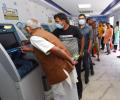
Unlike any other national asset, which is typically sold to the highest bidder, the profile of the bidder is the most important criterion for a licence to bank, and even for acquiring more than 5 per cent stake, explains Tamal Bandyopadhyay.

The Court deserves to be complimented for its verdict and indeed for doing what the government should have done long ago.

The Indian Council of Medical Research will start national-level sero surveys to assess the spread of Covid-19 and all states/Union territories should also be encouraged to conduct them so that information from all geographies can be collected, the Union health ministry said on Friday.
Move to ensure deals do not hit govt licence fees, revenue share.

Vodafone's brass, including chief executive officer Vittorio Colao, told investors roaming policy was applicable to its 3G licences, in spite of claims that it was not.

State Ayurved Department's licence officer Y S Rawat said the notice is being issued to the firm to explain from where it got the permission to launch a 'corona kit' as a cure from the virus.
However, this rule will not be applicable to companies holding licences for a period of three years, even if they acquire licences in other circles to expand their operations, according to sources close to the development. The suggestion was made by the DoT to the Telecom Regulatory Authority of India, which will decide on making it a regulation, along with other suggestions on the lock-in period put forward by the licensor.

Vodafone m-pesa was one of the 11 firms that was given payments bank licence by the Reserve Bank of India in 2015.

Meanwhile, new players like Etisalat, Unitech Wireless, Loop, STel and Sistema Shyam Teleservices -- who got the spectrum (radio waves) in 2008 -- paid Rs 80.78 crore (Rs 807.8 million) in spectrum charges and licence fees to the government.
Initial fears of Internet access charges rising by 6-12 per cent following the Telecom Regulatory Authority of India recommendations to impose an annual licence fee for Internet Service Providers appear to be unfounded.
Internet services are likely to get more expensive.
Currently, ISPs pay only Re 1 as annual licence fee while Internet telecom service providers, or telecom operators providing Internet services, pay 6 per cent of their annual gross revenue as licence fee.

Bharti Airtel, Reliance Jio, Vodafone Idea said the Railways should not be permitted to offer commercial services like Wi-fi and voice and video communication.

The department for promotion of industry and internal trade has rejected Walmart-backed Flipkart's proposal seeking approval for entry to the food retail sector, citing a regulatory issue, an official said on Monday. The government permits 100 per cent foreign direct investment in food retail for food produced and manufactured in India.

Pakistan's electronic media regulator has suspended the licence of US-based Nickelodeon channel for airing cartoons dubbed in Hindi, days after it decided to enforce a complete ban on Indian TV and radio contents amid Indo-Pak tensions.

Vodafone had contended in its plea that DoT instead of signing and executing the ULs had at the last moment informed them that their request for deletion of 'restrictive' clauses in licence pertaining to roaming cannot be accepted.

The department of telecommunication has decided that the existing variable licence fee structure for telecom operators should be replaced with a uniform one. An departmental note suggests a uniform licence fee of 8.5 per cent for all types of services.

Trai has asked the department of telecommunication to 'keep in abeyance' the grant of new 2G (mobile) licences till the watchdog finalises its recommendations.

Despite strong AUM growth, MFs lag behind other popular investment avenues. MFs received only 6 per cent of total household savings in 2021-2022.

WHO says the regulatory procedures in place for the licencing of pandemic vaccines, including procedures for expediting regulatory approval, are rigorous and do not compromise safety or quality.
The regulatory system in India has become a farce, and needs to be either scrapped, or thoroughly revamped. The way the law has been formulated, Trai is a toothless tiger -- it works well if the ministry chooses to be gentlemanly and takes the recommendations seriously; if the ministry chooses to assert its authority, there's little Trai can do, says Sunil Jain.

The announcement comes a day after the Subject Expert Committee (SEC) on COVID-19 of the CDSCO recommended granting emergency use authorisation (EUA) to the COVID-19 vaccines Covovax and Corbevax with certain conditions.

As the Centre pushes reforms in the power sector, especially for the beleaguered electricity distribution segment, several states, especially those ruled by Opposition parties, are clamouring against it. Maharashtra, West Bengal, Tamil Nadu, and Kerela have voiced their reservations against the proposed amendments to the Electricity Act, 2003. The irony is the states opposing the amendments on the ground of threat of privatisation already have private partnerships in power supply. The proposed Bill was slated to be placed on the floor of Parliament in the Monsoon session. But it still awaits Cabinet approval amid several states complaining that they have been not consulted on the issue.
In stark contrast with the Telecom Regulatory Authority of India (Trai) recommendation that only Unified Access Service Licence (UASL) licence-holders should participate in 3G auctions, Communications Minister A Raja today suggested that foreign telecom companies, too, would be permitted to bid for 3G spectrum.
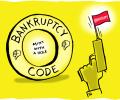
In a major relief to stressed assets, the Cabinet approved the proposed IBC amendment that the licences, permits, concessions, and clearances for a corporate debtor cannot be terminated or suspended or not renewed during the moratorium period. The Cabinet also allowed amending the code to streamline the corporate insolvency resolution process and protect last-mile funding to boost investment in financially distressed sectors.

India's telecom sector has been through dizzying peaks, troughs, policy U-turns, court battles, brutal competition, and daily controversies. India could go back to a private sector duopoly with just Reliance Jio and Bharti Airtel surviving the mayhem. The third player, Vodafone Idea, could be history.

A paper authored by Rajan said, state-linked banks can be a first step in altering the ownership structure of some PSBs, where the government brings down its stakes to below 50 per cent, creating distance from operations of banks, and improving governance along the way.

'There have been many cases where clients have indicated that they feel suicidal as they feel they have no other options to deal with their financial hardship.'
Companies like Shanta Biotech, Panacea Biotec and Serum Institute of India are among the leading vaccine makers which have not been able to file any fresh application to the WHO due to this temporary de-recognition of the country's drug regulatory system. The WHO pre-qualification is essential for companies to supply vaccines to national immunisation programmes funded by the WHO or UNICEF outside the country.
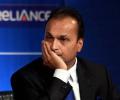
The development comes a day after RCom posted a consolidated loss of Rs 30,142 crore for July-September 2019 due to provisioning for liabilities after the Supreme Court ruling on statutory dues.

Affordable pricing, a variety of themes, and the ease of transacting are among key reasons that have made smallcases a hit among young investors.
DoT, has decided that it will not cancel the GSM licences of dual-technology companies.

Tata Sons will increase its stake in budget carrier AirAsia India (AAI) to 83.67 per cent by acquiring an additional 32.67 per cent for $37.66 million from AirAsia Investment Ltd (AAIL), according to a regulatory filing. Currently, AAIL, which is a wholly-owned subsidiary of Malaysia-based AirAsia, holds 49 per cent stake in the Bengaluru-based AirAsia India. In a regulatory filing to stock exchange Bursa Malaysia, AirAsia said, "The board of directors of AirAsia wishes to announce that its wholly-owned subsidiary AAIL and Tata Sons Pvt Ltd, India, on December 29, entered into a share purchase agreement."

For years it has been evident that fibre and DTH would give tough competition to cable in India where regulatory overload has mutilated an already warped industry structure. OTT added fuel to the fire. From Rs 27,000 crore in 2010, cable's share of subscription revenues is now estimated at Rs 13,000 crore.
Seventeen firms had originally applied for the licence but the figure has since come down to 12, with several big players in the mix.
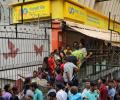
There will be different ways of returning the money, depending on the profile of the depositors and the amount, predicts Tamal Bandyopadhyay.
In financial year 2006-07, the exchequer earned Rs 2,090 crore (Rs 20.90 billion) as spectrum charges and Rs 6,360 crore (Rs 63.60 billion) as licence fees.

Over the last four days, the Indian arm of US pharmaceutical giant Pfizer, Pune-based Serum Institute of India and Hyderabad-based pharmaceutical firm Bharat Biotech have applied to the Drugs Controller General of India seeking emergency use authorisation for their COVID-19 vaccines.
